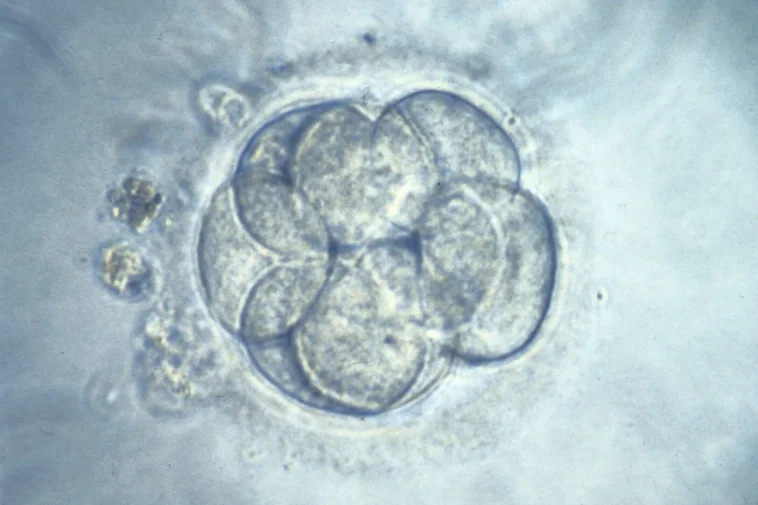
Gene Editing in Human Embryos: A Precarious Step Forward
Scientists at Columbia University have achieved a significant, albeit controversial, milestone by employing base editing to modify three disease-linked genes within early-stage human embryos. This groundbreaking research was not aimed at initiating pregnancies but rather at rigorously assessing the safety and efficacy of rewriting human DNA at the very genesis of life. The study, currently a preprint awaiting peer review, has ignited a fervent global debate, sharply dividing the scientific community and bioethicists alike.
While some researchers laud this as a pivotal technical achievement, potentially paving the way for the eradication of devastating inherited diseases before birth, others express profound concern. Critics caution that such advancements push society perilously close to the ethically fraught concept of “designer babies,” a notion widely regarded by bioethicists as akin to modern eugenics. The controversy is far from academic, with commercial entities already demonstrating keen interest. Nucleus Genomics, a New York-based firm specializing in screening IVF embryos for serious genetic disorders and developing predictive models for complex traits like intelligence, intends to financially support future research by study leader Dieter Egli and his team. This commercial involvement exacerbates worries that even experimental breakthroughs could stimulate demand from affluent patients and incentivize companies to market embryo-editing technologies, despite lingering safety and ethical dilemmas. Egli, however, firmly believes that transparency is paramount, advocating for public discourse because these debates are no longer theoretical. He unequivocally states that clinical use of this technology is “as clear as day and night” not currently viable.
The Strategic Imperative of Early Intervention
The fundamental rationale behind editing embryos lies in the profound impact of correcting a harmful mutation at the earliest developmental stage. Cells within an early embryo are totipotent, destined to differentiate into every tissue in the body. Theoretically, a precise genetic correction made at this point could propagate throughout an entire child’s body, and critically, even be passed on to future generations.
This strategy holds immense promise for genetic disorders that severely impair fetal development or manifest as debilitating conditions in newborns. For certain developmental and metabolic diseases, intervention after birth may prove too late, and current gene-editing treatments often face significant challenges in effectively targeting various organs. While scientists have successfully repaired disease-causing mutations in mouse embryos and fetuses, including those linked to blood disorders, the biological differences between species are substantial. Human and mouse embryos repair DNA damage in fundamentally distinct ways, making it challenging to extrapolate the safety and success of mouse-based strategies to human applications. This critical uncertainty underscores the impetus for direct testing of gene-editing tools in human embryos.
However, the international scientific community is far from unified on this approach. Numerous groups have called for a temporary moratorium on human embryo editing, and the practice remains illegal in several countries, reflecting deep-seated ethical concerns. The notorious case of Chinese scientist He Jiankui in 2018, who announced the birth of gene-edited babies using CRISPR-Cas9 to confer HIV resistance, sparked global outrage and served as a stark warning. Years of prior research had already highlighted CRISPR’s inherent risks, particularly its mechanism of cutting both DNA strands, which can lead to unintended mutations, large deletions, or off-target edits. He’s reckless experiment resulted in imprisonment, yet he continues to defend his actions. Subsequent studies only amplified these concerns, revealing that CRISPR editing in human embryos could cause extensive genetic damage, including the complete destruction of target gene-hosting chromosomes.
Base Editing: An Evolution, Not a Panacea
The recent Columbia University study employed base editing, a next-generation gene editor designed to mitigate some of CRISPR’s most significant shortcomings. This innovative approach rewrites individual DNA letters, contrasting with CRISPR’s double-strand cuts. By only “nicking” a single strand of DNA, base editing is generally considered to offer greater precision and fewer unintended alterations. The technology achieved a major clinical milestone last year by successfully treating a baby with a life-threatening genetic disorder, building on earlier laboratory studies that hinted at its potential in human embryos.
Egli’s team targeted three genes with the potential to cause serious illness, specifically converting the genetic letter A to G at precise locations. One target, PCSK9, is crucial for regulating “bad” cholesterol levels, with mutations significantly increasing the risk of heart problems. The engineered edit aimed to switch off this gene, mirroring therapeutic strategies already under investigation for adult patients. The other two targets, HBG1 and HBG2, are involved in producing fetal hemoglobin, an oxygen-carrying protein. The edits here were designed to mimic a natural protective variant that can alleviate symptoms in severe blood disorders like sickle cell disease and beta thalassemia.
Encouragingly, the team observed no signs of widespread DNA damage, suggesting base editing’s superior precision compared to CRISPR. However, the technology is far from flawless. A significant limitation emerged in the form of genetic mosaicism, where many embryos displayed a mixture of edited and unedited cells. This phenomenon presents a substantial hurdle for clinical application, as unedited cells could potentially outcompete edited ones during development, leaving the disease-causing mutation largely unaddressed. Furthermore, in some embryos, the edited cells ceased dividing altogether. The absence of overt chromosomal damage also does not fully guarantee safety, as subtle edits could still trigger detrimental long-term effects that might only become apparent after birth, at which point reversal would be impossible.
The Urgent Need for Scrutiny and Ethical Frameworks
Dieter Egli unequivocally stresses that embryo editing remains far from clinical readiness. He emphasizes the potential damaging effects of base editors on embryos, questioning the rationale for their use without a complete understanding of these impacts. His team is actively focused on research to reduce mosaicism and plans to test the technology in embryos developed to approximately 100 cells, a stage typically used by fertility clinics for evaluation and freezing.
The scientific community’s reaction to this research is mixed but generally cautiously optimistic about the methodology. Fertility expert Paula Amato of Oregon Health & Science University, not involved in the study, described the strategy as “promising.” Similarly, genomics researcher Greg Neely at the University of Sydney lauded the work as “less reckless, more careful and ethical than previous attempts,” predicting its positive historical recognition.
Nevertheless, profound skepticism persists, particularly regarding the ethical implications of permanently altering the genetic inheritance of future generations without their consent. The study’s association with Nucleus Genomics has heightened these concerns. The company has previously faced controversy for developing genetic predictions for complex traits such as intelligence and height, and for its marketing slogan, “have your best baby.” Kian Sadeghi, CEO and co-founder of Nucleus Genomics, views embryo editing as an extension of this vision, potentially aiding couples with severe mutations who struggle to produce enough unaffected embryos for selection during IVF.
However, Fyodor Urnov of the University of California, Berkeley, strongly disagrees, arguing that existing IVF clinics already effectively screen embryos for numerous inherited disorders without altering their DNA. Given the inherent risks of genetic modification, selecting an unaffected embryo is often a demonstrably safer option. Urnov predicts that this new research will primarily impact the burgeoning “baby improvement” movement. This movement, once considered taboo, is gaining momentum, yet the complex traits most frequently cited by its proponents – intelligence, height, and emotional regulation – are governed by hundreds, if not thousands, of genes that scientists still poorly understand. Attempting such enhancements is far beyond current technological capabilities, and each additional genetic edit significantly escalates the risk of unforeseen and potentially harmful consequences. Egli reiterates that openly conducted research is crucial for generating the necessary information to actively discourage the misuse of such powerful technologies.
#EngagementBoost #SocialMediaTips #TrendingNow #ContentMarketing #DigitalStrategy #AudienceEngagement #ViralContent #MarketingTips #GrowYourBrand #OnlineSuccess #ConnectWithYourAudience #ReachMorePeople
Artificial Intelligence, Cloud, Cybersecurity