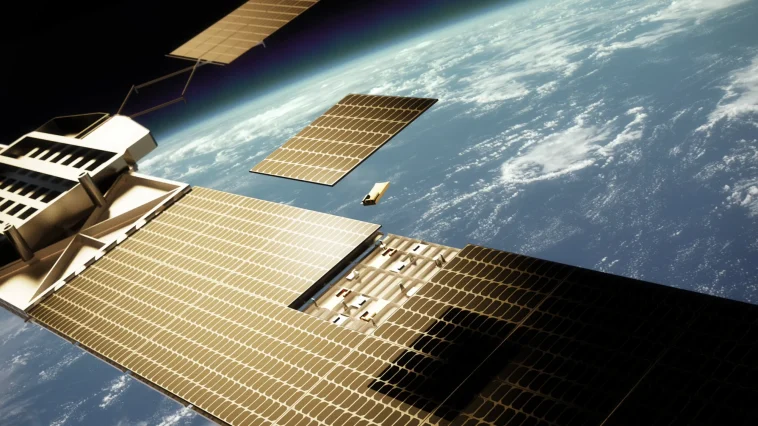
The Sky’s the Limit: Orbital Data Centers Emerge as AI’s Sustainable Frontier
The relentless expansion of Artificial Intelligence (AI) is pushing the boundaries of terrestrial infrastructure, revealing a profound and growing challenge: the immense appetite of AI data centers for electricity, water, and cooling. As these computational behemoths whirl into action with every query to platforms like ChatGPT, their environmental footprint is becoming increasingly unsustainable, catalyzing a significant shift in thinking toward a radical solution – orbital computing.
The Earthbound Conundrum
On Earth, the AI boom is creating tangible impacts on local communities and resources. Consider Henrico County, Virginia, a hub that welcomed 37 data centers. Residents there have recently faced a jarring 25% surge in electricity rates, leading to calls for conservation in schools and government buildings to alleviate strain on the power grid and manage escalating costs. This scenario is far from isolated. Public opposition to new data center construction is hardening across the United States. A recent Gallup poll revealed that 71% of Americans oppose data centers being built in their communities, with concerns ranging from environmental degradation and excessive resource consumption (particularly water and energy) to rising utility bills and diminished quality of life.
This backlash is translating into concrete legislative action. In 2026 alone, over 300 state data center legislation bills have been filed across more than 30 states, marking a decisive shift from incentive-driven policies to stricter regulatory oversight. States like New York have passed one-year moratoriums on new hyperscale data centers, while others, including Georgia and Oklahoma, are reconsidering or eliminating tax incentives that once attracted these facilities. The sheer scale of AI’s energy demands is staggering; global data center electricity consumption, driven largely by AI, is projected to double by 2030, potentially reaching 945 TWh, or nearly 3% of total global electricity consumption. The U.S. alone, the world’s largest data center market, could see its data center energy demand increase by 130% by 2030, with AI workloads accounting for almost half of this surge. This escalating demand, coupled with growing public and regulatory pressure, underscores the urgent need for alternative computing paradigms.
Glimpsing the Heavens: Orbital Computing’s Promise
Faced with these terrestrial constraints, leading AI companies and innovative startups are literally looking upwards. The vision is to shift computational workloads from energy-hungry ground-based data centers to thousands of solar-powered satellites orbiting Earth. In this futuristic paradigm, AI queries would be processed in space, with the results seamlessly beamed back to users below, who would remain oblivious to the extraterrestrial processing power. This approach offers a compelling path to harness continuous solar energy, bypass land-use conflicts, and dramatically reduce the environmental footprint associated with cooling systems on Earth.
Conquering Cosmic Cooling Challenges
However, the seemingly infinite chill of space presents its own unique set of engineering hurdles, particularly when it comes to heat dissipation. While space offers a vacuum, it lacks the convective cooling mechanisms (air or water) essential for terrestrial data centers. Orbital systems must rely on thermal radiation, converting waste heat into infrared energy and radiating it into the cosmos. Historically, this has necessitated bulky and heavy hardware, adding significant cost and complexity to space missions where every gram counts.
Addressing this critical challenge, the California Institute of Technology and Sophia Space, a pioneering California startup, have secured a U.S. patent for a groundbreaking chip cooling system. Their innovation, dubbed Sophia TILE (Thermal Integrated LEO Edge), proposes a modular architecture where computing and data storage are packaged into thin, flat units. Each TILE is designed with solar cells on its sunlit side for power, and a custom heat-spreading layer that efficiently channels heat to radiator panels on its dark side, allowing passive radiation into deep space. This design is a significant departure from traditional, satellite-wide cooling systems, offering a scalable and inherently more efficient approach to managing the intense heat generated by high-performance AI chips in orbit.
Redefining Space Infrastructure
The modularity of the TILE system is a game-changer. Thousands of these chips could be interconnected, forming vast orbital data centers or organized into smaller, distributed clusters. This distributed architecture enhances reliability, much like a modern power grid, where the failure of one TILE does not compromise the entire system. Furthermore, the compact, rollable design of TILE modules allows for efficient packaging during launch, unfolding into large computing platforms once in orbit, mirroring the innovative deployment of NASA’s Roll-Out Solar Arrays (ROSA) which have demonstrated similar flexible, lightweight, and deployable power solutions for spacecraft.
Sophia Space is pushing forward with ambitious plans, targeting an on-orbit technology demonstration of its TILE architecture aboard an Apex Nova satellite bus in 2027. This initial mission will validate the hardware’s performance, including its ability to host AI inference models and process onboard sensor data. By 2030, the company envisions an array of 2,000 TILEs delivering up to a megawatt of dedicated computing power, marking a significant step towards a future where data processing happens at the source of infinite solar energy.
The Galactic Race for AI Supremacy
The pursuit of orbital computing is rapidly becoming a global race. Sophia Space and Caltech’s pioneering efforts are part of a broader international movement. Chinese entities like ADA Space, in collaboration with Zhejiang Lab, have already launched satellites for their “Three-Body Computing Constellation,” with plans for a much larger network. Meanwhile, American titans such as SpaceX, Starcloud (formerly Lumen Orbit), and Blue Origin are actively seeking regulatory approvals for constellations that could eventually comprise hundreds of thousands, if not millions, of AI-capable satellites in low Earth orbit. SpaceX alone has filed with the FCC for up to one million orbital data center satellites. Starcloud has already demonstrated in-orbit AI model training using an Nvidia H100 GPU. The scale of these proposed constellations highlights the intense competition and strategic importance placed on establishing a robust space-based computational infrastructure.
Navigating the Orbital Frontier
While the promise of orbital data centers is immense, the journey skyward is not without its own set of challenges. Low Earth orbit (LEO) is an increasingly congested environment, teeming with active spacecraft and a growing accumulation of space debris. The proliferation of vast satellite constellations, such as those proposed for orbital computing, exacerbates the risk of collisions, which could generate even more debris and potentially render critical orbital regions unusable. Regulatory bodies, like the FCC, are scrutinizing these unprecedented applications, calling for system-level analysis, disclosure of cumulative collision risks, and a phased, demonstration-based authorization approach.
Beyond collision risks, astronomers express significant concern that the sheer number of satellites could profoundly hinder ground-based and space-based observations of the universe, interfering with optical and radio astronomy and potentially “ruining the night sky.” Experts warn that planned constellations could add thousands of naked-eye-visible satellites, in some cases outnumbering visible stars, and contaminate a substantial percentage of telescope images.
For the foreseeable future, orbital data centers are unlikely to entirely supplant their terrestrial counterparts. Instead, they are more likely to serve as powerful complements, excelling at processing data collected directly by spacecraft and beaming only the critical results back to Earth, thereby reducing latency and bandwidth demands. Despite the inherent complexities and emerging controversies, the momentum towards orbital computing is undeniable, driven by the escalating demands of AI and the innovative solutions being developed to meet them. As Sergio Pellegrino, a Caltech engineer collaborating with Sophia Space, aptly put it, “We need to become more comfortable with space doing things for us.” The expansion of AI into the cosmos is not just a technological feat; it represents a profound re-evaluation of our infrastructure to support an intelligent future.
#TechTrends #AIInnovation #FutureIsNow #DigitalTransformation #GadgetGoals #VirtualReality #SmartLiving #CyberSecurity #Web3 #Metaverse #AIArt #GamingCommunity
Artificial Intelligence, Cloud, Cybersecurity