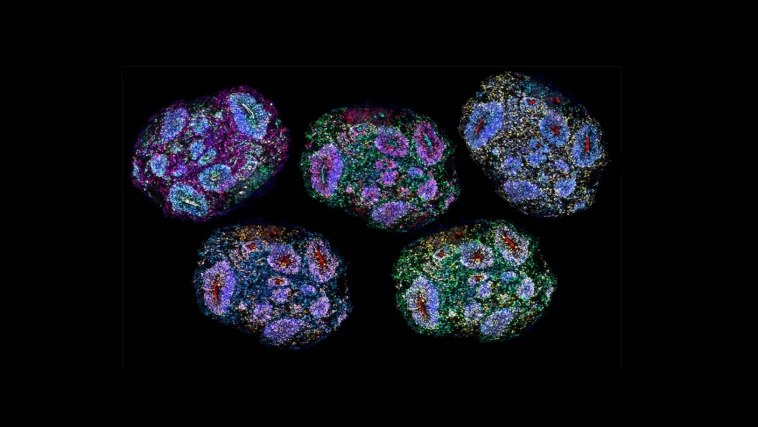
A New Epoch in Neuroscience: Mini-Brains Unlocking the Secrets of Human Development
For the intricate biological systems we call mini-brains, five years marks an unprecedented leap from fleeting existence to sustained, profound insight. These remarkable blobs of tissue, known as brain organoids, have revolutionized neuroscience by offering an unparalleled window into the complexities of human brain development. Derived from stem cells, they spontaneously generate a diverse array of brain cells, forming electrically active neural circuits that mirror the gene expression patterns of early fetal brains. Some have even demonstrated rudimentary function, processing pain signals or controlling isolated muscles, pushing the boundaries of what was once imaginable in in-vitro models.
Their increasing structural and functional sophistication has, for years, sparked vital bioethical debates regarding their potential for consciousness. However, a persistent challenge has been their limited lifespan. Most early mini-brains survived only a few months before their delicate neurons succumbed, impeding researchers from studying the later, crucial stages of pregnancy and postnatal development. These periods are particularly critical for understanding the genesis of severe neurodevelopmental disorders like schizophrenia, epilepsy, and autism.
The Dawn of Extended Longevity
A groundbreaking study led by Harvard’s Paola Arlotta has now shattered these limitations, redefining the timeline for organoid research. Last week, the team unveiled a method that kept mini-brains alive for over five years—a staggering feat that triples previous records and represents the longest lifespan achieved to date. Published in Nature, these findings detail how these organoids matured on a timetable strikingly similar to natural human brain development, with the oldest ones exhibiting genetic activity akin to that of a typical 4-year-old. This unprecedented longevity promises to unlock previously inaccessible stages of human brain maturation, providing a powerful platform for understanding complex disorders.
The developmental fidelity observed was a significant surprise to the research team. Even when cells from older organoids were mixed with younger ones, they continued maturing on their original schedule. This suggests the presence of an inherent “internal developmental clock” that meticulously tracks their progress, irrespective of external cues. As Dr. Irene Faravelli, a co-first author on the study, noted, “It was not a given at all that our simplified model would match natural development in this many ways.” This intrinsic timing mechanism offers profound implications for understanding the fundamental processes that govern brain development and disease.
Pioneering Progress in Organoid Engineering
Early iterations of mini-brains struggled for survival, often succumbing within weeks due to a lack of vital blood supply to their central cells. However, relentless innovation in the field has led to increasingly sophisticated culturing techniques. Researchers meticulously refined protocols, coaxing stem cells into forming layered structures resembling the cerebral cortex and even integrating rudimentary vascular networks. This continuous refinement significantly extended their viability.
Previous milestones include studies that maintained mini-brains for up to two years, enabling the observation of cortical development from gestation through the first year after birth. Arlotta’s latest breakthrough now pushes this boundary dramatically, with some organoids in their lab even reaching seven years of age, each a “peppercorn-sized clump” housing over a million healthy cerebral cortex cells. This extended observation period provides an unparalleled opportunity to trace the subtle nuances of neural wiring and how early genetic changes might precipitate neurological conditions later in life.
Human brain maturation spans roughly two decades, a period marked by constant neuronal rewiring. Conditions like schizophrenia and certain forms of epilepsy often manifest during adolescence, making the study of later developmental stages critically important. The ability to grow patient-specific mini-brains from their skin cells, preserving associated genetic mutations, offers an invaluable tool to investigate precisely how and when neural pathways diverge in these disorders.
The Intricate Mechanism of Timekeeping
To achieve this remarkable longevity and precision, Arlotta’s team meticulously tracked 34 organoids, collecting data at regular intervals over five years. A crucial innovation was modifying the growth medium—a nutrient and protein-rich slurry—mid-development, providing sustained support for neuronal activity and survival.
The researchers then employed advanced techniques, including single-cell RNA sequencing and epigenetic analyses, to monitor changes in gene activity and chemical markers that regulate gene expression. The results were striking: young organoids mimicked the first trimester of human development, progressing to resemble second-trimester brains by three to six months. After a year, their gene activity profiles matched newborns, culminating in a resemblance to a 4-year-old’s brain at the experiment’s conclusion. This remarkable adherence to a natural developmental timeline, confirmed by epigenetic age tracking, underscores the intrinsic biological programming within these models.
The “time warp” phenomenon, where older organoid cells, when mixed with younger ones, skipped early developmental stages to produce mature neurons, further solidifies the concept of an intrinsic cellular memory of time. This suggests a cell-intrinsic clock that dictates the pace of brain development, offering new avenues for understanding and potentially manipulating developmental trajectories in disease. While these molecular similarities are profound, it is crucial to remember that a mini-brain, even one resembling a 4-year-old’s brain at a molecular level, does not possess the same complex wiring or computational capabilities as a living brain shaped by sensory experiences and bodily interactions. They offer a molecular blueprint, not a complete cognitive entity.
Ethical Frontiers and Future Promise
The extended lifespan and growing sophistication of brain organoids necessitate a continuous, rigorous engagement with bioethical considerations. The question of potential consciousness, while currently considered unlikely without interaction with a social environment, remains a vital discussion point as the technology advances. Ensuring robust ethical oversight and transparent communication with donors about the potential uses of their cells is paramount.
Nonetheless, the immediate practical implications of these long-lived organoids are immense. The ability to cryopreserve organoid cells at different developmental stages, akin to a “save point” in a video game, will dramatically accelerate research. Scientists can now bypass the arduous process of growing new organoids from scratch for each study, streamlining investigations into disease progression and enabling high-throughput drug screening.
The Arlotta team plans to leverage this breakthrough to grow long-lived organoids from individuals with disorders like schizophrenia and epilepsy, aiming to unravel disease mechanisms and identify novel therapeutic targets. Looking ahead, the integration of sensory stimuli—such as light, sound, or touch—into these organoid systems holds the potential to further enhance their complexity and fidelity to in vivo development, moving closer to modeling the full tapestry of human brain maturation, including postnatal events. This new epoch in brain organoid research marks a monumental step towards demystifying the human brain’s most elusive secrets.
#TrendingNow #Innovation #TechLife #DailyMotivation #Inspiration #FitnessGoals #TravelBug #Foodie #Fashionista #ArtLovers #SustainableLiving #Mindfulness
Artificial Intelligence, Cloud, Cybersecurity