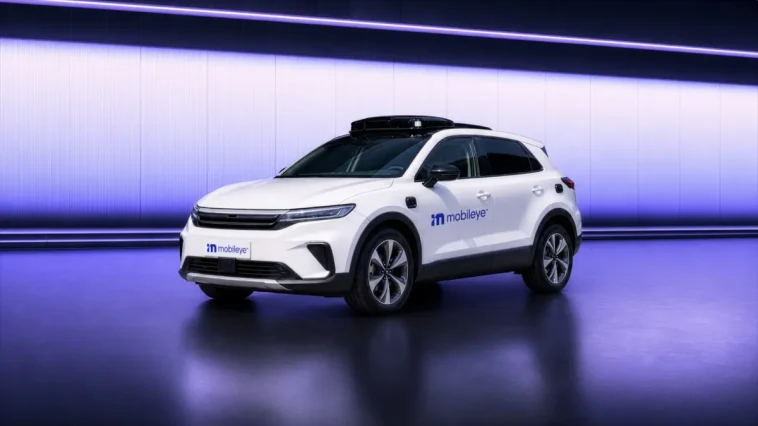
Mobileye Pivots: From AV Supplier to Robotaxi Operator in Bold Strategic Shift
Mobileye, the Intel subsidiary renowned for its pioneering work in autonomous vehicle (AV) technology, is set to dramatically expand its market presence. Historically a critical supplier of advanced driver-assistance systems (ADAS) and full self-driving solutions to major automakers, the company has now declared its ambitious entry into the robotaxi operational space. This strategic pivot signals a significant evolution for Mobileye and the broader autonomous mobility landscape.
Embracing a Dual Strategy: Supplier and Operator
The publicly traded Israeli firm announced plans to launch its own robotaxi service in a yet-to-be-named U.S. city by 2027. This initiative marks a definitive move beyond its long-standing supplier-centric business model. The initial deployment will comprise an impressive fleet of 100 autonomous vehicles, to be phased in throughout that year, laying the groundwork for substantial future growth.
Should this initial phase prove successful, Mobileye projects a massive scaling to approximately 17,000 robotaxis over the subsequent five years. This aggressive expansion underscores the company’s confidence in its technology and its vision for shaping the future of urban transportation.
The “Robotaxi Revolution” Accelerates
Amnon Shashua, Mobileye founder and CEO, emphasized the transformative potential of this venture. “The robotaxi revolution has only just begun, and its potential for transforming how we travel around the world continues to increase,” Shashua stated, highlighting concerns about the industry’s growing reliance on a limited number of technology providers and business models. This move by Mobileye could inject much-needed diversification and competition into the nascent sector.
Mobileye’s journey began with supplying millions of computer vision chips, fundamental for automotive safety features and ADAS. The company later advanced into developing sophisticated chips and software capable of handling complex autonomous driving scenarios, rigorously testing its innovations in various global cities. Its self-driving system currently powers solutions for industry giants like Volkswagen and its MOIA subsidiary.
Navigating Competitive Waters
This bold foray into robotaxi operations positions Mobileye in direct competition with some of its existing and potential clients, a calculated risk that reflects the high stakes and vast opportunities within the autonomous mobility sector. It also places Mobileye alongside established robotaxi players such as Waymo, Cruise, and Zoox, intensifying the race for market dominance in driverless ride-hailing. The capital-intensive nature of launching and scaling such a service demands robust financial backing and technological prowess.
The company’s robotaxi aspirations are not entirely new. As early as 2018, Shashua articulated his belief that the “Holy Grail” of passenger car autonomy — where consumers could own fully driverless vehicles — was ultimately attainable only by first conquering the robotaxi business. This pragmatic approach acknowledges that public adoption and regulatory frameworks often mature through controlled, service-oriented deployments before widespread consumer ownership.
Leveraging Expertise for Vertical Integration
To facilitate this new venture, Mobileye will establish a dedicated operating business for its robotaxi service, which will naturally integrate its proprietary self-driving system. Critically, the company plans to leverage Moovit, the transit and ride-hailing app it acquired, for the essential consumer-facing aspects of the service, creating a vertically integrated ecosystem. This allows Mobileye to control the entire user experience from technology to ride fulfillment.
While specific vehicle partners for the fleet were not named, Mobileye indicated it would collaborate with “AV-ready vehicle platform manufacturers.” Industry speculation, fueled by promotional images, suggests a potential partnership with Chinese automaker Great Wall Motors, possibly utilizing a modified Ora iQ electric crossover. Such collaborations highlight the global nature of autonomous vehicle development and deployment.
Shashua underscored that this initiative represents an extension, not a replacement, of Mobileye’s existing partnerships. “We remain deeply committed to enabling automakers and mobility providers with Mobileye Drive. At the same time, operating our own service allows us to accelerate adoption, gain direct operational experience, and showcase the full potential of autonomous mobility.” This dual strategy could offer a unique advantage, providing direct operational feedback to refine its core technology while expanding its revenue streams. By directly engaging with real-world operational challenges, Mobileye can gain invaluable insights that will further enhance its supplier offerings, benefiting its partners in the long run and potentially accelerating the overall timeline for widespread autonomous vehicle adoption.
#TrendingNow #ExplorePage #ForYou #Viral #ChallengeAccepted #InstaGood #Motivation #Inspiration #LifeHacks #DailyVibes #PositiveEnergy
Artificial Intelligence, Cloud, Cybersecurity