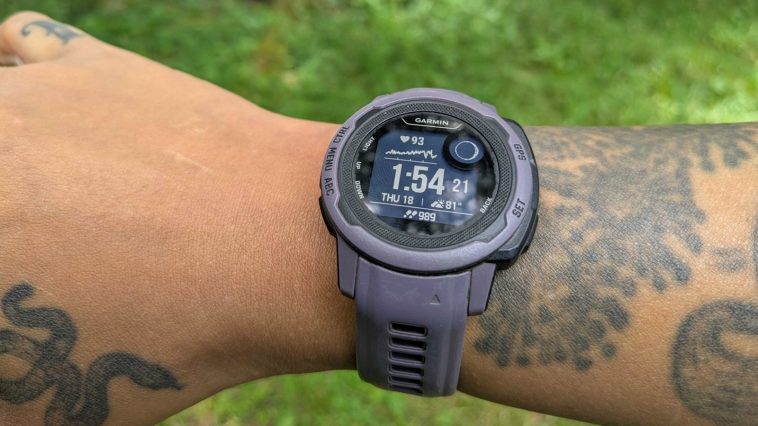
The Unseen Barrier: Why Tattoos Still Confound Your High-Tech Wearables
For an industry that prides itself on seamless integration with our lives, the persistent incompatibility between advanced smartwatches and fitness trackers and tattooed skin remains a perplexing Achilles’ heel. Consumers investing significant sums in these sophisticated devices often encounter a frustrating reality: their body art can render crucial health-monitoring features unreliable, or even entirely non-functional. This isn’t merely an anecdotal complaint; it’s a widely documented issue across major device ecosystems, sparking widespread frustration among a significant demographic of tech-savvy users.
The paradox is striking: devices capable of intricate gesture recognition and personalized coaching are stumped by a layer of pigment. This fundamental hurdle exposes a design oversight that demands more comprehensive solutions as wearables become increasingly integral to personal health management.
The Science Behind the Stumbling Block
The root of the problem lies in the core technology many wearables employ for vital sign monitoring. Heart rate sensing, for instance, predominantly relies on photoplethysmography (PPG). This technique involves emitting a green LED light into the skin and measuring the subtle changes in light absorption and reflection caused by blood flow beneath the surface. Tattoos, by their very nature, introduce an optical barrier. The ink, particularly dense or dark pigments, can scatter or absorb this light before it can reach the blood vessels effectively, leading to either inaccurate readings or a complete failure to detect a pulse.
Beyond heart rate, many wearables also utilize light-based sensors, alongside accelerometers and electrical sensors, for wrist detection – confirming the device is actually being worn. When placed over tattooed skin, these optical sensors can fail to register the presence of a wrist, compelling users to repeatedly unlock their device or preventing it from logging activity altogether. This significantly degrades the user experience, turning a convenient device into a persistent annoyance.
Manufacturers Acknowledge the Challenge
Device makers are well aware of this limitation. Giants like Garmin explicitly state on their support pages that “Tattoos (ink, pattern, saturation) can block the heart rate sensor’s light, causing inaccurate or missing readings.” They advise users to wear their watches on tattoo-free skin for optimal performance. Apple issued similar cautions years ago with the launch of its initial Apple Watch models. Such advisories underscore that this is not a user error but a recognized technical constraint, highlighting the need for more robust sensor designs that can accommodate the diversity of human skin.
Current Workarounds and Their Limitations
In the absence of a universal technological fix, the tattooed community has developed various ingenious, albeit imperfect, workarounds. One common suggestion is to simply reposition the device to an area of the wrist or arm that is free of tattoos. While functional, this can be ergonomically awkward or deviate from a user’s long-standing preference for wearing a watch on a particular wrist.
More surprisingly, some users have found success with makeshift solutions like placing epoxy bottle cap stickers or layers of clear tape over the sensors. The exact mechanism for this “fix” is not fully understood but may involve creating a more consistent optical interface for the light sensors. Reusable accessories designed to achieve a similar effect have also emerged. For those prioritizing accurate heart rate data above all else, an external chest strap monitor remains a highly accurate alternative, though it sacrifices the convenience and continuous, integrated tracking of a wrist-worn device. These solutions, while offering temporary relief, underscore the fundamental gap in current wearable technology design.
The Path Forward: Sensor Innovation and Inclusive Design
Ultimately, the definitive solution lies in advancing sensor technology itself. The reliance on light-based PPG, while effective for many, proves inadequate for all skin types and conditions. Future wearables could incorporate alternative sensing methods, such as enhanced bioimpedance sensors that measure electrical signals through the body, or even miniature radar technology that can penetrate skin more effectively. Exploring a wider range of light wavelengths beyond green, which might be less susceptible to tattoo ink absorption, also presents a promising avenue for research and development.
This challenge also highlights a broader imperative for inclusive design in tech. The inconsistent reliability of light-based sensors for individuals with darker skin tones further emphasizes the need for diverse representation in research and development teams. Ensuring technology performs equitably for everyone, regardless of skin pigmentation or body modifications, is a critical step towards truly universal wearables. Anecdotal evidence suggests some newer devices, like Google’s Pixel Watch 4, may exhibit improved performance with tattooed skin, hinting at ongoing internal development efforts. While rumors of Samsung updates have circulated, widespread user complaints suggest consistent solutions across the industry remain elusive.
The Need for Deeper Research
Quantifying the exact impact of tattoos on wearable sensor accuracy is complex, given the myriad variables involved. A 2025 study attempted to shed light on this, comparing readings from devices worn over tattooed versus non-tattooed skin. While the study observed inaccuracies, particularly at rest, the results were not uniformly consistent. Researchers noted that the degree of interference could vary with activity level, with less impact seen during higher intensity exercise. Crucially, in some instances, tattoos had no measurable effect on heart rate validity.
These findings underscore the intricate nature of the problem, where factors such as ink color, density, depth, tattoo age, and individual skin characteristics all play a role. The study, utilizing devices like the Polar Verity Sense and comparing them against the more accurate Polar H10 chest strap, demonstrates the methodological rigor needed. However, the conclusion remains clear: significant, granular research is still required to fully understand these variables and inform the development of truly tattoo-agnostic wearable sensors. Only through such dedicated innovation can the tech industry ensure its health-monitoring devices serve all users effectively, without discrimination by design.
#TechTrends #FutureIsNow #InnovationNation #DigitalLife #AIRevolution #GadgetGoals #CreativeCommunity #InspireDaily #LearnSomethingNew #MindfulnessMatters #WellnessJourney #GlobalGoals
Artificial Intelligence, Cloud, Cybersecurity