## The Perilous Predicament of an Orbital Rescuer
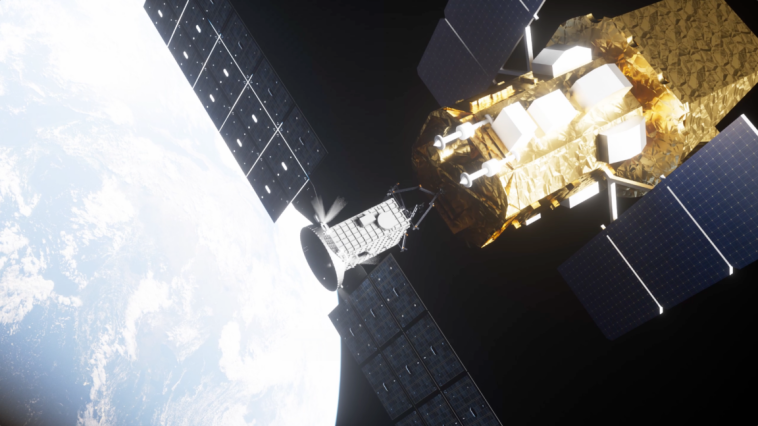
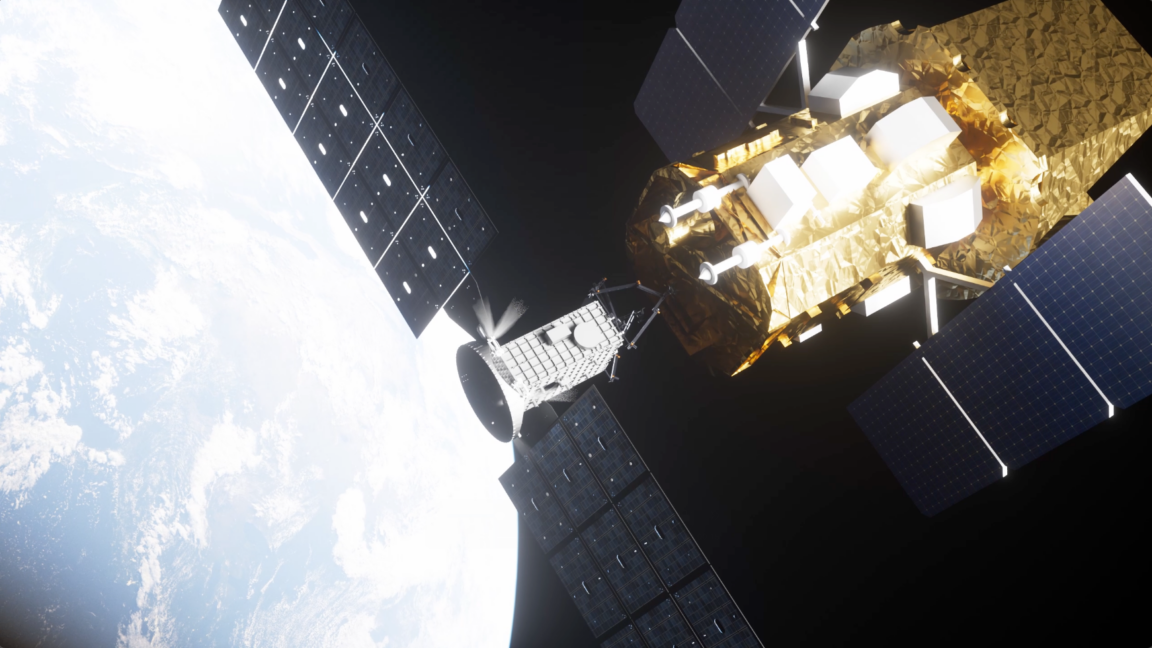
High above Earth, approximately 200 miles into the vacuum of space, a critical mission to save NASA’s venerable Swift gamma-ray observatory has encountered a severe setback. Just one week ago, the refrigerator-sized Link satellite, on a trajectory to intervene and extend Swift’s operational life, suddenly spun violently out of control. This unexpected malfunction has cast a shadow of uncertainty over a pioneering space salvage effort.
The situation quickly became dire. The Link spacecraft, intended as a robotic savior, began an uncontrolled rotation across multiple axes, severely compromising its ability to maintain stable communications with ground control. This critical loss of telemetry and command link has dramatically complicated efforts to stabilize the errant satellite and diagnose the root cause of its chaotic tumble.
## A High-Stakes Orbital Rescue Mission
Link’s primary objective was to rendezvous with the $500 million Swift observatory, grappling onto it to execute a vital orbital boost. Swift, a cornerstone of high-energy astrophysics, has been instrumental in detecting and studying gamma-ray bursts, offering unprecedented insights into the universe’s most powerful explosions. Its continued operation is paramount to the scientific community.
The urgency of Link’s mission stems from Swift’s gradually degrading orbit. Without intervention, atmospheric drag would inevitably pull the observatory into a fiery re-entry, prematurely ending its distinguished scientific career. Katalyst Space Technologies, the innovative startup behind Link, secured a substantial $30 million contract from NASA, underscoring the agency’s commitment to exploring commercial solutions for in-orbit servicing.
## Technical Hurdles and Their Deeper Implications
The technical failures Link experienced are complex and multifaceted. Beyond the loss of stable communication, two of the satellite’s three crucial reaction wheels, vital for precise attitude control and pointing, ceased functioning. Further complicating the crisis, sporadic radio contact revealed issues with the spacecraft’s cold gas thrusters, which are essential for finer adjustments and maintaining orbital stability.
These concurrent failures represent a significant engineering challenge, demanding swift and innovative diagnostics from millions of miles away. The interplay of disabled reaction wheels and faulty thrusters suggests a systemic or cascade failure, the understanding of which is crucial not just for Link’s recovery, but for the future design and resilience of complex in-orbit servicing vehicles.
## Katalyst Space Technologies: Forging a New Frontier
Katalyst Space Technologies has emerged as a key player in the nascent but rapidly expanding field of commercial satellite servicing. Their $30 million NASA contract is a testament to the agency’s confidence in the private sector’s ability to develop cutting-edge solutions for space sustainability. This mission, even with its current challenges, pushes the boundaries of what is possible in satellite life extension and maintenance.
The outcome of the Link mission will have profound implications for Katalyst and the broader space industry. A successful recovery and mission completion would validate their innovative approach and pave the way for numerous future servicing contracts, while a failure would underscore the immense technical difficulties inherent in such pioneering ventures.
## The Broader Vision: The Future of In-Orbit Servicing
This orbital drama transcends the fate of a single mission; it highlights the critical importance of in-orbit servicing (IOS) for the long-term viability of space operations. As Earth’s orbit becomes increasingly congested, capabilities like life extension, repair, refueling, and even active debris removal are becoming indispensable. The Link mission represents a pivotal step towards a future where satellites are not merely disposable assets but rather maintainable infrastructure.
The insights gained from this challenging recovery attempt, regardless of its ultimate success, will undoubtedly inform future designs and operational protocols for autonomous rendezvous and docking systems. Such missions are foundational for the next era of space exploration and utilization, promising greater flexibility, resilience, and sustainability for our invaluable assets orbiting above. The world now watches as engineers race against time to bring Link back from the brink, hoping to salvage not just a mission, but a significant leap forward for space technology.
#HashtagStrategy #SocialMediaTips #DigitalMarketing #ContentCreation #EngagementBoost #AudienceGrowth #ViralContent #MarketingTips #CreatorLife #OnlineBusiness #BrandBuilding #CommunityLove
Artificial Intelligence, Generative AI, Large Language Models