

Bezos Earth Fund: A Mid-Decade Review of its $10 Billion Climate Commitment
By InnovationWarrior.com Senior Tech Journalist
In 2020, as the world grappled with escalating climate crises, Amazon founder Jeff Bezos made a monumental pledge: $10 billion to establish the Bezos Earth Fund, dedicated to combating the planet’s most significant environmental threats by 2030. Describing climate change as “the biggest threat to our planet,” Bezos envisioned the fund as a powerful engine supporting “scientists, activists, NGOs” to “preserve and protect the natural world.” Six years into this ambitious endeavor, the fund has allocated at least $2.4 billion across more than 371 grants, yet it faces the considerable challenge of accelerating its disbursement to meet its $10 billion target by the end of the decade. This mid-term assessment reveals a strategic evolution, marked by shifts in leadership and a diverse portfolio of high-impact initiatives.
The scale of the Bezos Earth Fund’s commitment is unprecedented in philanthropic efforts toward climate action, underscoring a growing recognition among tech titans that innovation and substantial capital are essential to address global warming. The fund’s journey reflects a dual strategy: leveraging established environmental organizations while also making calculated, sometimes risky, bets on cutting-edge technologies and community-led solutions. Its progress and challenges offer valuable insights into the complexities of large-scale climate philanthropy.
Leadership and Strategic Direction
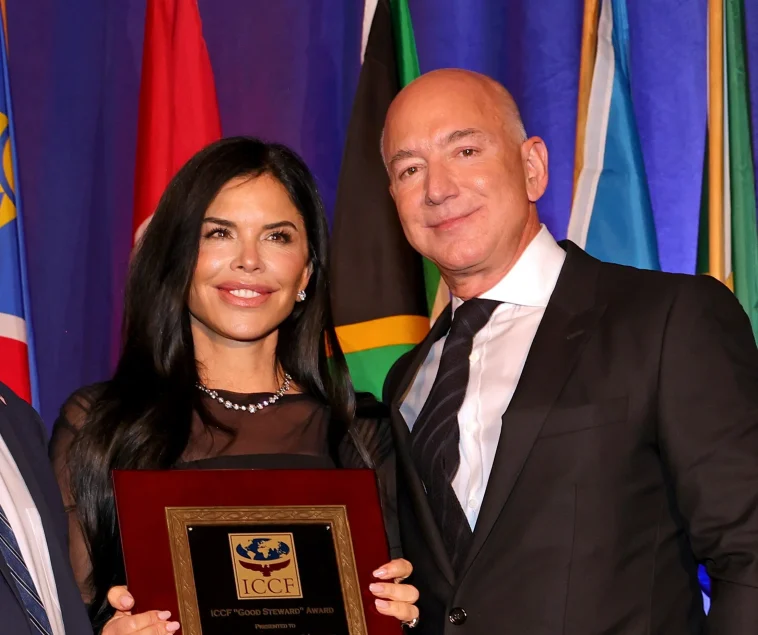
Initially, the Earth Fund was helmed by Andrew Steer, former president of the World Resources Institute, signaling a strong emphasis on established environmental expertise. However, in 2025, a significant leadership transition occurred with Tom Taylor, a longtime Amazon executive and former head of the Alexa division, stepping into the role of President and CEO. This shift from a veteran environmentalist to an operational leader with a deep background in large-scale tech execution suggests a potential pivot towards a more efficiency-driven, “inventor’s mindset” approach, focusing on scalable solutions and measurable outcomes. Lauren Sánchez Bezos, now Jeff Bezos’s wife, serves as the fund’s Vice Chair, increasingly taking a public-facing role in key initiatives and articulating the fund’s vision. Her presence adds a compelling human element to the fund’s formidable philanthropic presence.
The Opaque Path to Impact
While the Earth Fund asserts it “doesn’t just write checks and walk away,” its grantmaking process largely remains opaque. The fund does not accept unsolicited proposals, preferring to direct its resources toward programs already identified on its website. This proactive, rather than reactive, approach allows the fund to strategically deploy capital into areas it believes offer the highest leverage for systemic change. However, it also raises questions about inclusivity, potentially limiting access for smaller, grassroots organizations that might lack the direct connections to secure funding, even as the fund emphasizes environmental justice. The grants themselves, therefore, serve as the clearest indicators of the fund’s evolving priorities and its ambition to drive transformative impact.
Phoenix Species Project: A Bold Bet on Biodiversity
In a significant move in 2026, the Earth Fund pledged $100 million to the Phoenix Species Project, a collaborative $200 million initiative aimed at reversing the decline of 100 critically endangered species across 30 countries. Developed through discussions between Jeff Bezos, Lauren Sánchez Bezos, actor Leonardo DiCaprio, and biologist Wes Sechrest, this project represents one of the largest philanthropic efforts focused exclusively on species recovery.
The choice to concentrate on 100 species, despite over 31,000 being categorized as endangered by the IUCN, is a strategic decision. It serves as a concentrated test case to determine whether sustained, significant funding can achieve more than merely slowing species disappearance. Crucially, the five-year funding cycles for each species aim to provide conservationists with the stability needed for long-term recovery work, moving beyond the often disruptive short-term grant models. This collaborative, outcome-focused approach could establish a new paradigm for biodiversity conservation, offering a scalable model for future efforts globally.
The Opening Round: Laying the Foundation
The fund’s initial and largest outlay, a $791 million commitment in 2020, spanned 16 grants, with nearly two-thirds concentrated among five prominent environmental organizations: The Environmental Defense Fund (EDF), Natural Resources Defense Council (NRDC), The Nature Conservancy (TNC), World Resources Institute (WRI), and World Wildlife Fund (WWF), each receiving $100 million. This early strategy signaled a reliance on established institutions with proven track records and global reach.
The grants have yielded a mixed record, illustrating the inherent risks in ambitious climate initiatives. While WWF reported success in protecting and restoring over 2.4 million acres of mangroves by late 2025, EDF’s MethaneSAT project, a satellite designed to detect methane emissions, unfortunately lost contact in 2025 after roughly a year of data collection. Despite this setback, EDF maintains that the broader effort to monitor methane will continue through other means, such as MethaneAIR. This outcome underscores the fund’s “smart bets” philosophy, acknowledging that not every venture will succeed, but the potential gains from high-risk, high-reward innovations are crucial for systemic change.
Greening America’s Cities: Local Impact, Global Resonance
Lauren Sánchez Bezos has become the public face of the “Greening America’s Cities” initiative, a $400 million program launched in 2023. This program directly addresses the critical need for cooler, healthier urban environments, recognizing green spaces as essential urban infrastructure, particularly as extreme heat events intensify.
By mid-2026, $150 million had been deployed through 39 grants across 11 cities, supporting community-led projects often in partnership with local governments. Examples include Pacoima Beautiful’s $3.5 million grant to transform Los Angeles’ Pacoima Wash into a greenway and Grow Greater Englewood’s $3.8 million for an agricultural-eco district in Chicago. Sánchez Bezos often speaks of the personal connection to such green spaces, emphasizing not just environmental benefit, but the creation of places of belonging and community pride. The initiative highlights a vital trend in climate action: addressing global challenges through localized, equitable solutions that improve daily life for residents in underserved communities.
Sustainable Protein Network: Innovating the Food System
The Earth Fund’s commitment to a “Sustainable Protein Network” was unveiled by Lauren Sánchez Bezos in 2024, with a $100 million pledge primarily directed towards university research. Instead of backing consumer brands, the fund is strategically investing in fundamental scientific advancements to make plant-based, cultivated, and fermented proteins cheaper, tastier, and more scalable.
This approach reflects an understanding that transforming the global food system, a significant source of greenhouse gas emissions, requires long-term, foundational innovation. Former CEO Andrew Steer articulated this vision, emphasizing the goal is not to compel vegetarianism but to offer sustainable alternatives to meet the projected 50% rise in global meat demand by 2050. Grants include $30 million each to Bezos Centers for Sustainable Protein at North Carolina State University, Imperial College London, and the National University of Singapore, alongside a $9.8 million grant to the Good Food Institute. These investments are critical for de-risking new technologies and fostering an ecosystem where sustainable proteins can achieve price and taste parity with conventional options, driving mainstream adoption.
The Brazilian Amazon: Protecting a Vital Ecosystem
Between 2023 and 2025, the Earth Fund awarded $100 million across at least 30 grants in the Brazilian Amazon. This initiative is rooted in the belief that the rainforest’s long-term survival is inextricably linked to the well-being and economic prosperity of its inhabitants. Cristián Samper, the fund’s nature lead, describes this as seeking “alternative paths to prosperity” for Amazonian communities.
On-the-ground efforts include a $4.2 million grant to Cooperacre and SOS Amazonia, supporting the sustainable production of rubber, fruits, and nuts. The fund also backs FOIRN, an Indigenous federation along the Rio Negro, to strengthen land governance across 13.5 million hectares, vital for combating threats like logging and mining. A broader $30.9 million package supports organizations like Nia Tero and the Wildlife Conservation Society in strengthening Indigenous land rights and establishing protected areas. These investments acknowledge the irreplaceable role of Indigenous knowledge and stewardship in conservation, aiming to build resilient local economies that protect, rather than exploit, the Amazon’s biodiversity and crucial carbon sinks.
#TechTrends #Innovation #FutureIsNow #AIRevolution #DigitalTransformation #GadgetGoals #SmartLiving #Cybersecurity #Web3 #Metaverse #VRGaming #EcoTech
Artificial Intelligence, Cloud, Cybersecurity
