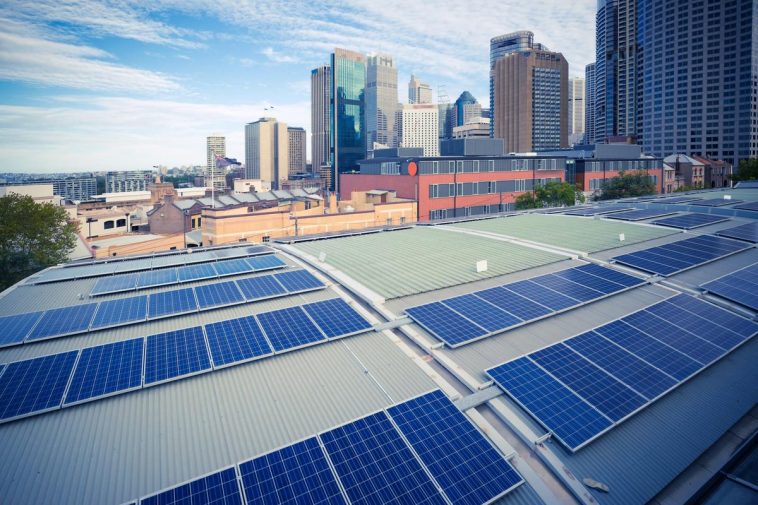
The number of CEOs listing environmental sustainability as a business priority rose over 300% since last year according to a recent Gartner survey. Meantime, some utility CIOs report cybercrime attacks have risen to millions of attempted incidents each day, and top talent has never been more difficult to attract and keep. It’s a trifecta of disruption that Australian electric and water utilities are meeting with their own industry disruption. With connected data from cloud-based technologies, forward-looking utilities are diversifying from legacy stalwarts to innovative service providers tackling climate change, heading off bad actors, and becoming an employer of choice.
Australian utilities are investing in digitalization to build more sustainable, secure infrastructure while attracting top talent.
getty
Utilities adopt sustainable business vision
As the sustainable business drumbeat gets louder, utility providers across Australia are doing much more than making noise about climate change imperatives. Regardless of size or services scope – including generators, distributors, retailers, and water providers – leaders are transforming business models to take advantage of new sustainable business opportunities. It’s especially relevant in a country traditionally powered by coal.
“While coal-powered emissions are historically a major part of the problem, the utility industry is transforming to be a driving force in achieving net zero targets and deliver more sustainable services,” said Conor Stephens, industry advisor for utilities at SAP ANZ. “We are entering a period major disruption, where utility leaders are using technology to expand market opportunities while meeting changing customer demands and regulatory mandates.”
Australia is arguably well-positioned to become a global leader in renewable energy given its sunny, windy topography and low population density. Selling green electricity, providing energy management tools, and partnering to help manage electric vehicle networks are among the sustainable services that utilities are exploring. Utilities are also intent on improving resilience against extreme weather and other events due to climate change. Water utilities are exploring sustainable sourcing and recycling wastewater. Admittedly, these new projects require an upfront investment, but once built, sustainable infrastructure and equipment can last longer and cost less over time.
Meeting the cybersecurity threat
For utility providers, cybersecurity is much more than securing customer and financial information in IT systems. It also means protecting the organization’s operational technology (OT) that manages assets as well as physical security to prevent access to equipment like substations. Hackers are increasingly targeting critical infrastructure operators like electricity, gas, and water suppliers. That said, most successful attacks are due to human error, making employee training critical, including disaster recovery drills and other preparedness scenarios. Stephens said cloud-based platforms are integral to a multi-faceted cybersecurity strategy.
“Utilities are moving to cloud-based solutions partly because they see the security benefits,” he said. “The cloud offers many advantages for managing large, complex IT and OT landscapes and addressing security requirements. For its part, SAP has developed SAP Critical Data Cloud, a cloud-based service specifically designed to provide SAP’s market-leading solutions at a higher tier of security and compliance for our critical infrastructure customers.”
Innovation culture attracts top talent
Staffing up with qualified people to meet business challenges like sustainability and cybersecurity is another challenge Australian utilities face. Following pandemic lockdowns that severely limited the importation of talent, many organizations have adopted work anywhere environments. Utility market leaders are also focused on creating a positive employee experience.
“New graduates don’t necessarily envision working at their local utility,” said Stephens. “The industry is rethinking how to position themselves as technology innovators with opportunities in hot areas like renewable energy and cybersecurity to build a more sustainable world. That encompasses workforce diversity too.”
To stave off employee turnover, numerous utilities have also beefed up mental health benefits and learning and development opportunities. Easy-to-use technology that delivers value is extremely important to the employee experience, for both office and field workers.
“One of our customers digitalized pole inspections using SAP Business Technology Platform, replacing manual, paper-based processes with an integrated system. Now field workers can use their mobile device to efficiently complete orders safely, connecting data to the back office for proof of compliance and further analysis,” said Stephens. “This is a great example of a utility using technology to improve capabilities along with the employee experience.”
As Australian utilities power up for more sustainable business models, there’s no doubt providers worldwide will learn valuable lessons and follow in their footsteps to address a host of disruptions safely and securely, ushering in a stronger future.
Learn more about how utilities are succeeding in the digital economy.